Balancing local needs with common goals
Looking back on 2025-26, I am proud of the way NWMPHN has continued to improve health outcomes for our communities while helping navigate a period of significant health system reform.
What continues to impress me is the commitment shown across our organisation and region to improving health care for the people who need it most.
Across every aspect of our work, from supporting health professionals and co-designing innovative programs to analysing data and applying evidence, our focus remains clear: improving health outcomes for people in our region while supporting the Australian Government's vision for a stronger, more connected health system.
Throughout the year, NWMPHN has maintained a strong focus on issues affecting our communities, particularly equitable access to care and pressures created by the rising cost of living. These challenges reinforce the importance of responsive, locally informed health care planning.
At the same time, the health system continues to evolve. Reforms such as MyMedicare, Urgent Care Clinics and Medicare Mental Health services present important opportunities to improve access to care, while also introducing new complexities for communities and providers. An important part of NWMPHN's role is helping people navigate these changes and supporting providers to work effectively within an increasingly connected system.
The Board of Melbourne Primary Care Network, as the governing body of NWMPHN, plays a critical role in enabling this work within an increasingly constrained fiscal environment. This year, the Board focused on renewal, organisational resilience and maintaining strong governance, while continuing to strengthen the organisation's risk management framework to support informed decision-making and long-term sustainability.
NWMPHN operates in a rapidly evolving policy and service environment. Agility and responsiveness remain essential, supported by the diverse skills, experience and expertise of our Board directors. I thank my fellow Board members for their insight, commitment and stewardship throughout the year.
I also acknowledge the extraordinary work of NWMPHN's staff, led by CEO Christopher Carter and the senior leadership team, along with the many people who contribute their time, expertise and energy to our work. This includes our clinical and community councils, expert advisory groups, People Bank, Primary Care Voices members, partners, commissioned organisations and the many dedicated primary health care providers serving our region.
Ultimately, all the complexity of health reform, service design and system stewardship comes down to one simple question: have we made a difference in people's lives?
Based on what I have seen over the past year, I believe the answer is a clear yes.

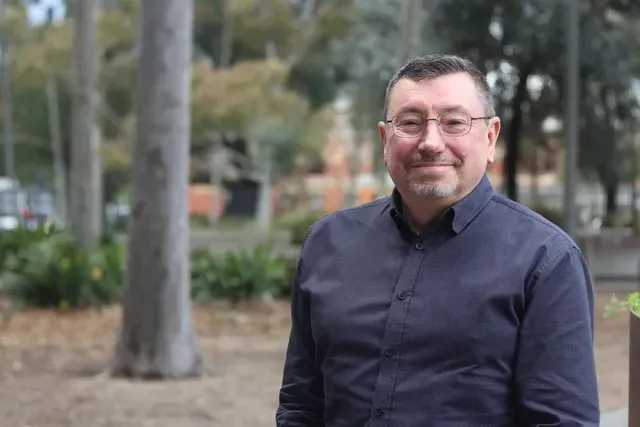
Damian Ferrie
Chairperson • NWMPHN
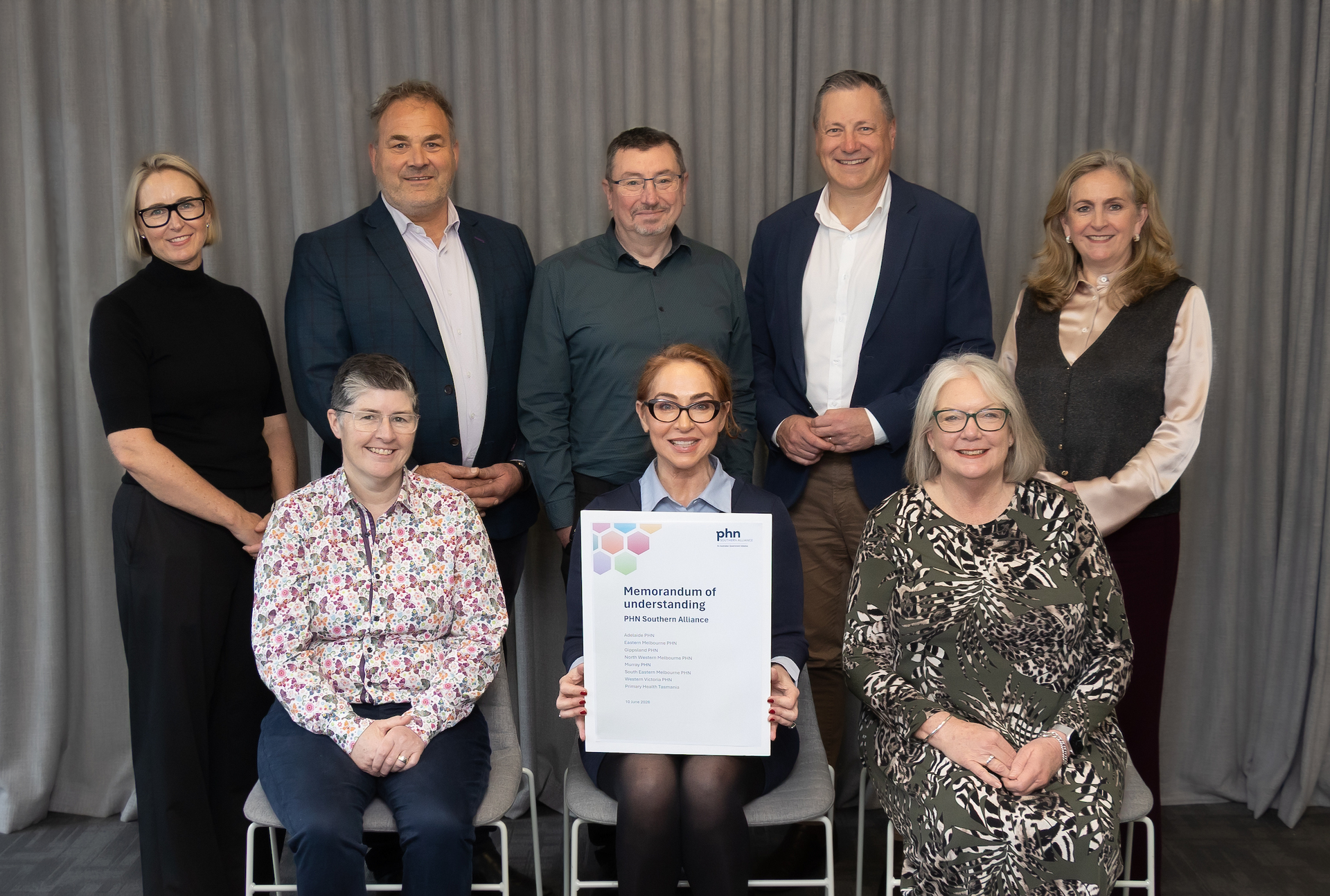
Pictured:
Left to right top row: Kate McIntosh - PHN Southern Alliance Acting General Manager, CEOs Matt Jones, Christopher Carter, Craig Wilding, Janine Wilson. Lower row: Lucy O'Flaherty, Amanda Proposch, Prof. Michelle McKay.
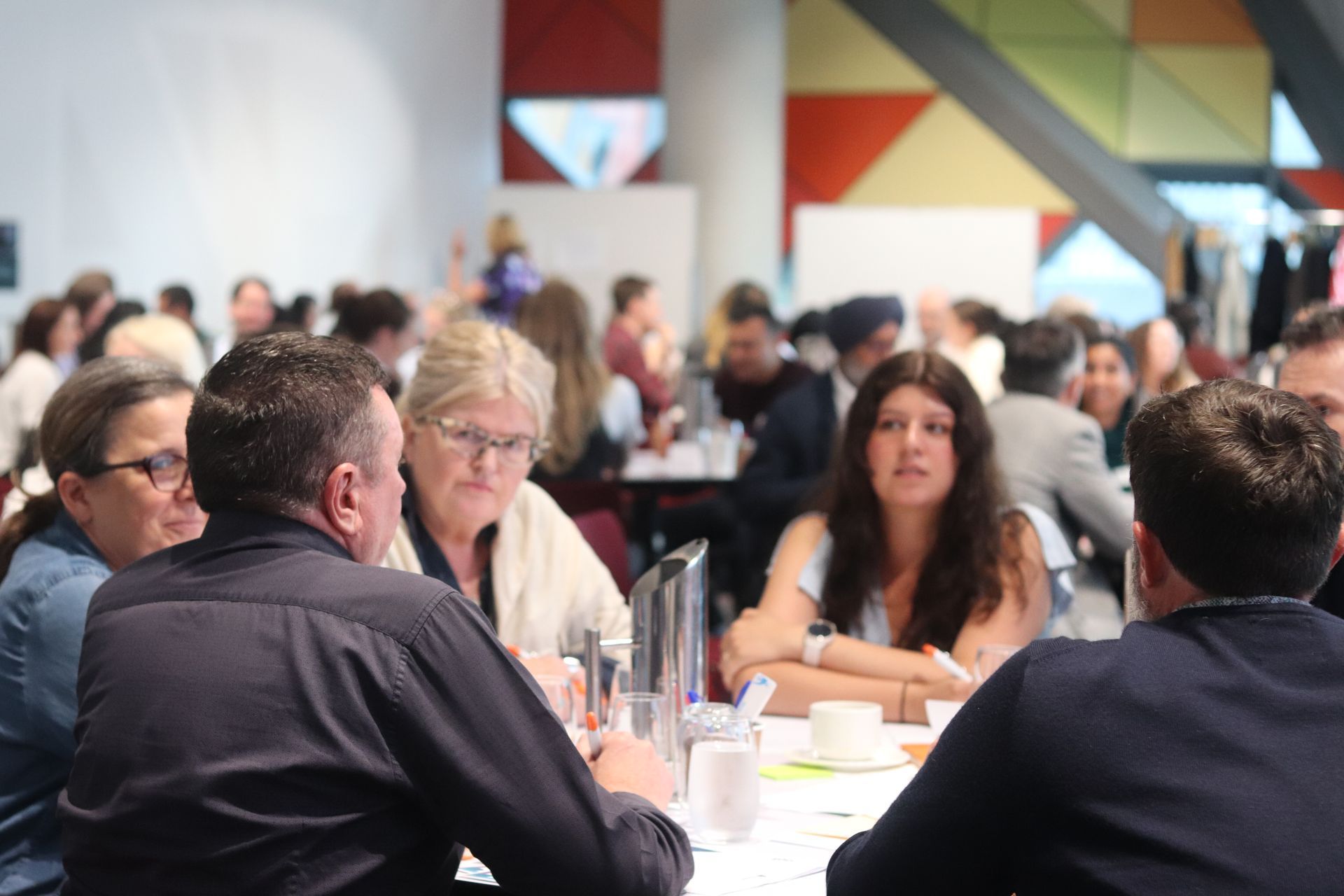
Pictured: In March 2026 an all staff meeting was held with a focus on understanding the 3Cs – commissioning, capacity building, and coordination in our work.
A year of significant and lasting change
This has been a year of significant achievement for NWMPHN, set against a backdrop of system-wide reform and adjustment.
Our role, like that of every primary health network, is to implement the priorities of the Australian Government Department of Health, Disability and Ageing (DHDA), bringing them into a local context and supporting their national reach.
The programs and initiatives we commission and coordinate encompass physical, mental, allied and community health, as well as aged care and pharmacy. For all their diversity, however, they share two common aims.
The first is to increase the efficiency and effectiveness of primary health care services, particularly for people at risk of poor health outcomes.
And the second is to improve coordination of health care to ensure people receive the right care, in the right place, at the right time.
Equity is central. Of particular importance is our longstanding partnership with the Victorian Aboriginal Health Service and the development of culturally safe, community-controlled models of care.
Across the region and its 200-plus language groups, we invest in culturally responsive care, strengthen the lived experience, peer and bicultural workforce, and commission services designed in partnership with multicultural communities.
Of course, health system reform – a core priority of the Department – can never be achieved only by standing up new facilities or introducing new services and incentives.
The bones of the present primary care sector are already robust and strong. Accordingly, much of our work during 2025-26 has focused on building capacity – broadening and deepening not only the abilities of service providers but also strengthening connections between them.
And while our focus is resolutely on delivering services appropriate to the geography and socioeconomics of our region, our work often has a wider impact.
NWMPHN collaborates often with local health service networks, research institutes, and other primary health networks, ensuring smooth and coordinated responses. Through the newly expanded PHN Southern Alliance and the national PHN network, we work together to improve consistency, harness collective knowledge, and share knowledge and infrastructure, delivering greater value for money across the health care system.
There are many more things I could mention – some of which you will find in the pages of this annual report.
I’m proud of all this work. I’m also encouraged by the momentum of national reform and hope that some other important changes may eventuate soon.
One of these, for example, would be the expansion of blended funding models in general practice – an approach that combines fee-for-service with flexible budgets for auxiliary use in managing patient care, particularly for those most at risk.
The impetus towards meaningful health care reform has been positive over the past few years, and I am optimistic about this very important adjustment coming to pass in the fullness of time.
I look forward to the next few years with a sense of hope and, yes, excitement.
Christopher Carter
Chief Executive Officer • NWMPHN