Primary care remains the foundation of a sustainable, accessible and high-performing health system. Throughout 2025-26, NWMPHN continued to support general practices and primary care providers to navigate significant health system changes while building capability to meet the changing needs of our growing and diverse communities.
Our deep understanding of the primary care sector, including the operational realities of running a practice and the outcomes providers are striving to achieve for their patients, enables us to deliver practical, targeted support.
During the year, we worked closely with practices to implement Australian Government initiatives such as, MyMedicare, the Bulk Billing Practice Incentive Program, the General Practice Aged Care Incentive and digital health reforms.
Through targeted education, quality improvement support, data-driven practice improvement and workforce engagement, we helped primary care providers strengthen access, improve quality of care and deliver better outcomes for local communities.
Pictured: NWMPHN's Primary Care Facilitators (L-R) Marie Hunt, Eliza Comerford and Dee Verma. Image credit- Leigh Henningham
practices are now fully bulk billing across the region, more than double from 136 last year.
of accredited practices are sharing data with NWMPHN through POLAR, supporting data-drive quality improvement and service planning.
attendees participated in NWMPHN education and training activities during 2025-26, with 99% likely to recommend it to a colleague.
Supporting quality improvement and practice transformation
NWMPHN worked closely with practices to help them navigate reforms and changes. We helped providers understand new requirements and access resources such as the Bulk Billing Practice Incentive Program (BBPIP). This allowed them to better decide which business decisions to make, while also helping to improve access to bulk-billed care for Medicare-eligible patients.
Support for the BBPIP grew over the year, with a significant increase in fully bulk-billing practices across the region, rising from 136 to 302 practices. The regional bulk-billing rate reached 56 per cent, exceeding the national rate of 49 per cent. This means that more people in our region, and the most vulnerable, can access quality health care without financial barriers.
NWMPHN understands that this incentive improves access but is not necessarily a marker of improved quality care. As such we support the shift towards blended funding models and multidiscipinary team care incentives.
One way to measure safe and quality care and ensure alignment with standards is practice accreditation. This year MyMedicare registration among eligible practices also continued to increase.
We also completed the
Improving Childhood Asthma Management (ICAM) project, a collaboration with Safer Care Victoria, which demonstrated strong engagement from the multidisciplinary communities of practice. The project generated high levels of participant satisfaction, evidence of changes to practice and increased understanding of HealthPathways Melbourne. For more information on outcomes, visit
this webpage.

Picture:
Shutterstock.
Using data and digital health to drive better outcomes
Data and digital health initiatives remained central to our work in supporting continuous improvement across primary care. We helped practices use data to identify opportunities for improvement, strengthen clinical quality and enhance patient outcomes through initiatives including
POLAR,
Practice Catalyst,
HealthPathways, and
Practice Incentive Program Quality Improvement (PIP QI) activities.
Digital health support was focused on helping practices respond to Better and Faster Access reforms using My Health Record, adopt Provider Connect Australia, and make meaningful use of digital health tools. Communications, education and engagement activities promoted awareness and uptake of digital health solutions, while three dedicated digital health education sessions attracted 102 registrations. Topics included My Health Record uploads, immunisation history and responding to AI-informed patients.
Our quality improvement work showed pleasing results in some areas, with four out of 10 measures coming in above the national average.
For the first time ever, NWMPHN practices were above the national average on four of the 10 quality measures. The data shows that improvements are being made – but more are possible.
The online clinical management and referral resource HealthPathways Melbourne continues to support a wide range of clinicians at the point of care. It is a valued resource with over 4400 users (a 52 per cent increase to June 2026). It received over 110,000 page views by GPs in the same period.
The most viewed clinical pathways were antenatal care, abnormal liver function tests and hypertension. The most searched terms included hypertension, gout and urinary tract infections. See HealthPathways Melbourne’s six-month report
here.
Picture:
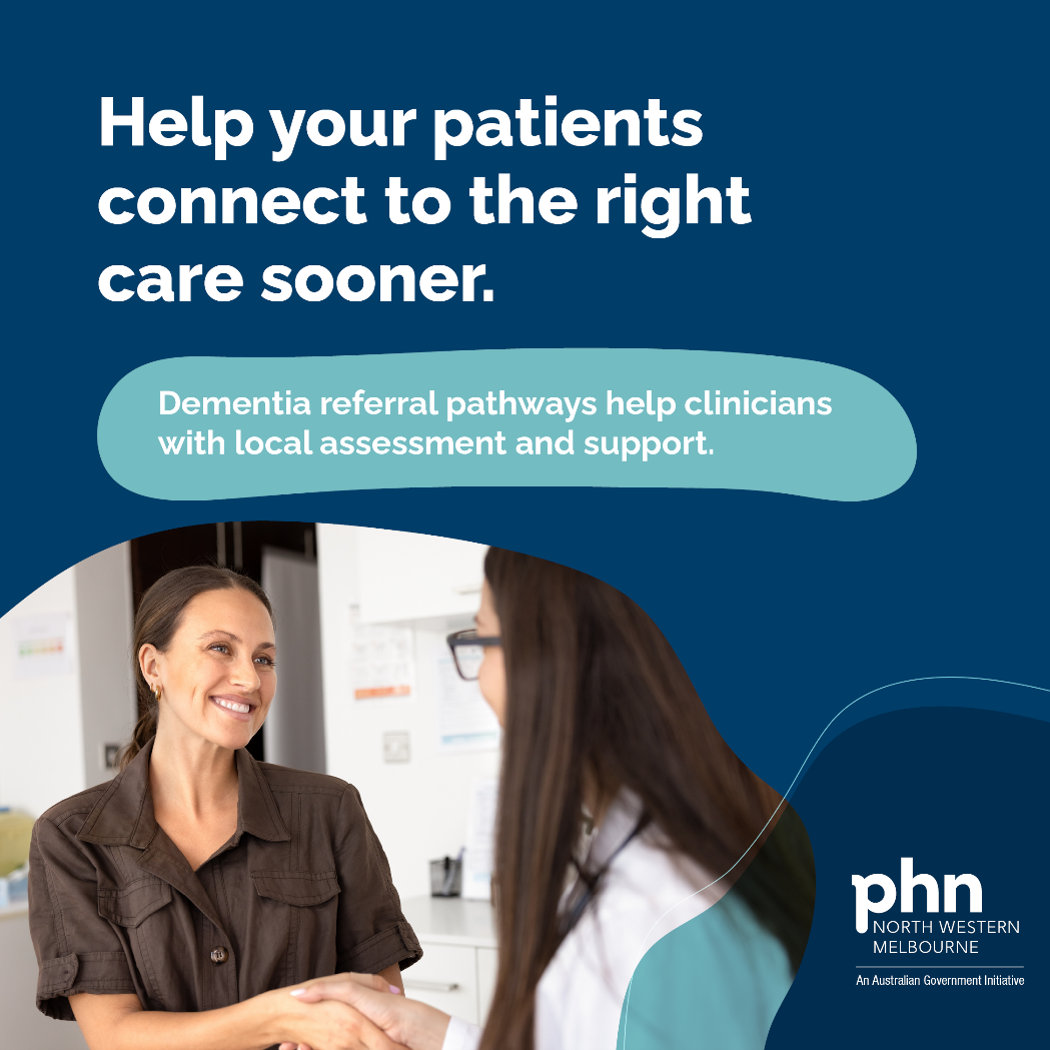
Social media promotion for the HealthPathways led dementia campaign 2026:
dementiadirectory.org.au
Building workforce capability through education and collaboration
Education, networking and engagement activities continued to strengthen the primary care workforce across the region. During 2025-26, 48 education sessions attracted 2,036 attendees, a substantial increase on the previous year.
Participants consistently reported high levels of satisfaction, with 99 per cent willing to recommend the education to colleagues. Practice nurse and practice manager networking sessions were relaunched across the north, west and central regions, helping strengthen professional connections and knowledge sharing.
Collaboration across NWMPHN programs supported primary care providers to respond to chronic conditions, family violence, dementia, palliative care and workforce challenges. Communities of practice provided further opportunities for learning, collaboration and shared problem-solving.
The second series of Complex Primary Care for General Practitioners was also delivered during the year. These education sessions were for GPs and GP registrars working in high needs communities containing high numbers of people with complex health needs. Participants highlighted the value of practical, case-based learning, referral pathways, resources and tools that could be applied directly in general practice.
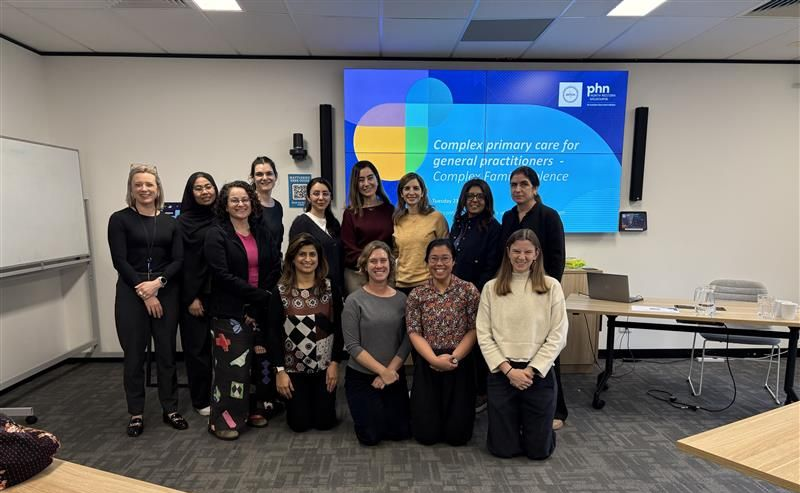
Pictured: Participants of the Complex Primary Care for General Practitioners education session, held at NWMPHN offices.