Urgent care clinics provide care for people with urgent but non-life-threatening immediate medical needs, but who cannot find a same-day appointment with their regular GP or would face long waits at the hospital.
The Australian Government has made major investments to ensure that Medicare Urgent Care Clinics (MUCCs) are a permanent part of our health system, and that four out of five people live within a 20-minute drive of one. The Victorian Government also plays a significant role, funding some clinics.
This year, NWMPHN commissioned two new Urgent Care Clinics (UCCs) – in Coburg and Northcote – taking the total in our region to 12.
NWMPHN is the Victorian statewide data and coordination lead for the UCC program.
To achieve this we’ve built a practical, end-to-end reporting and insights model. It brings together dashboards, quarterly data and patient experience feedback, with a process for using that information to support improvement.
As part of our coordination role, we also provide oversight and advice, meeting and working closely with service providers, hospitals, Ambulance Victoria and other primary health networks to strengthen care pathways.
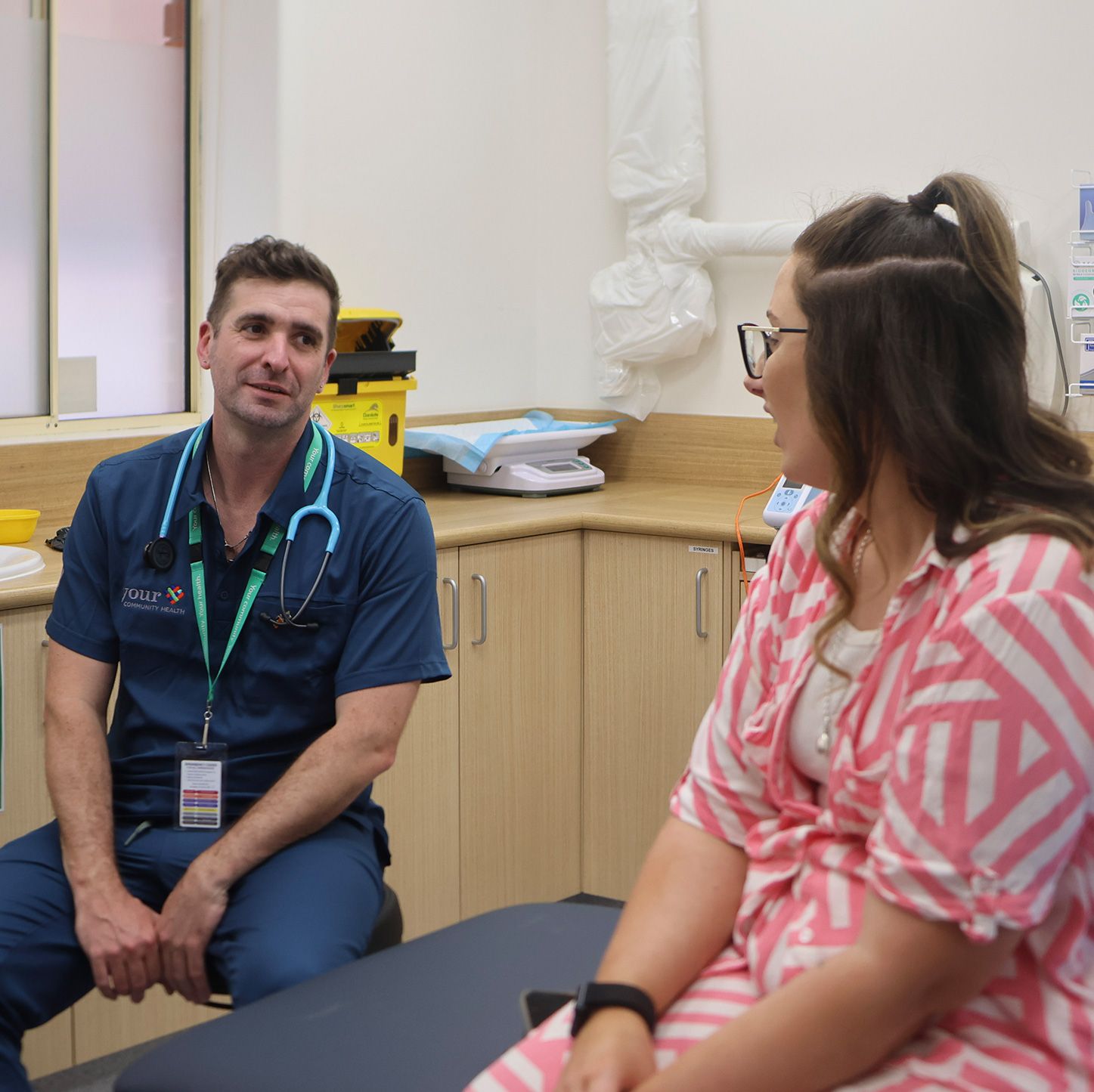
Pictured: Dr Ed Clarke and patient at Northcote Medicare Urgent Care Clinic.
visits were made to UCCs during 2025-26.
to 50% of consumers would otherwise have attended a hospital emergency department if a UCC had not been available.
urgent care clinics in the NWMPHN region.
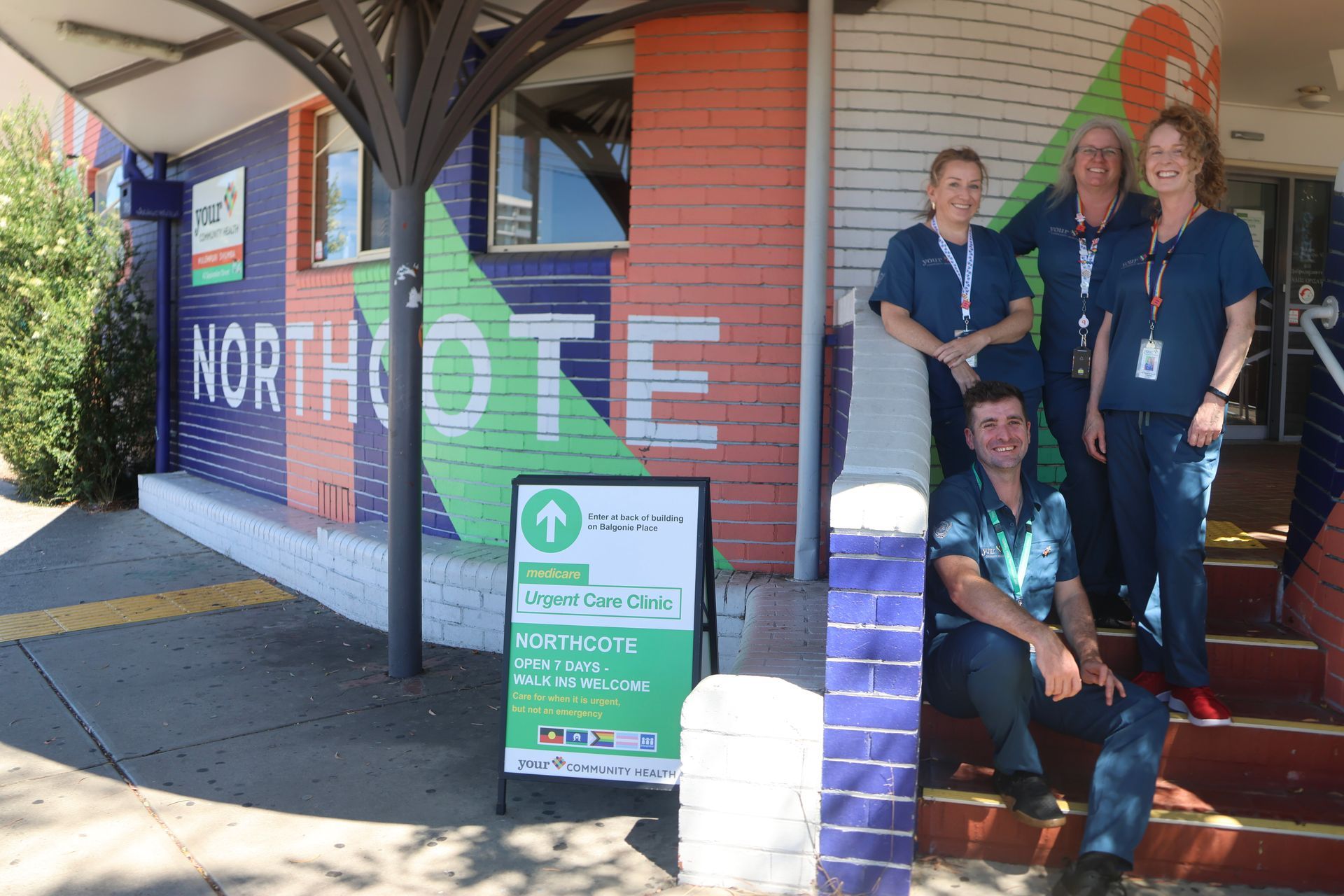
Pictured:
The team at Northcote Urgent Care Clinic (L to R) Chelsea Murrell registered nurse, Kim Moffat, Cate Grindlay and Dr Ed Clarke. Images courtesy of Your Community Health.
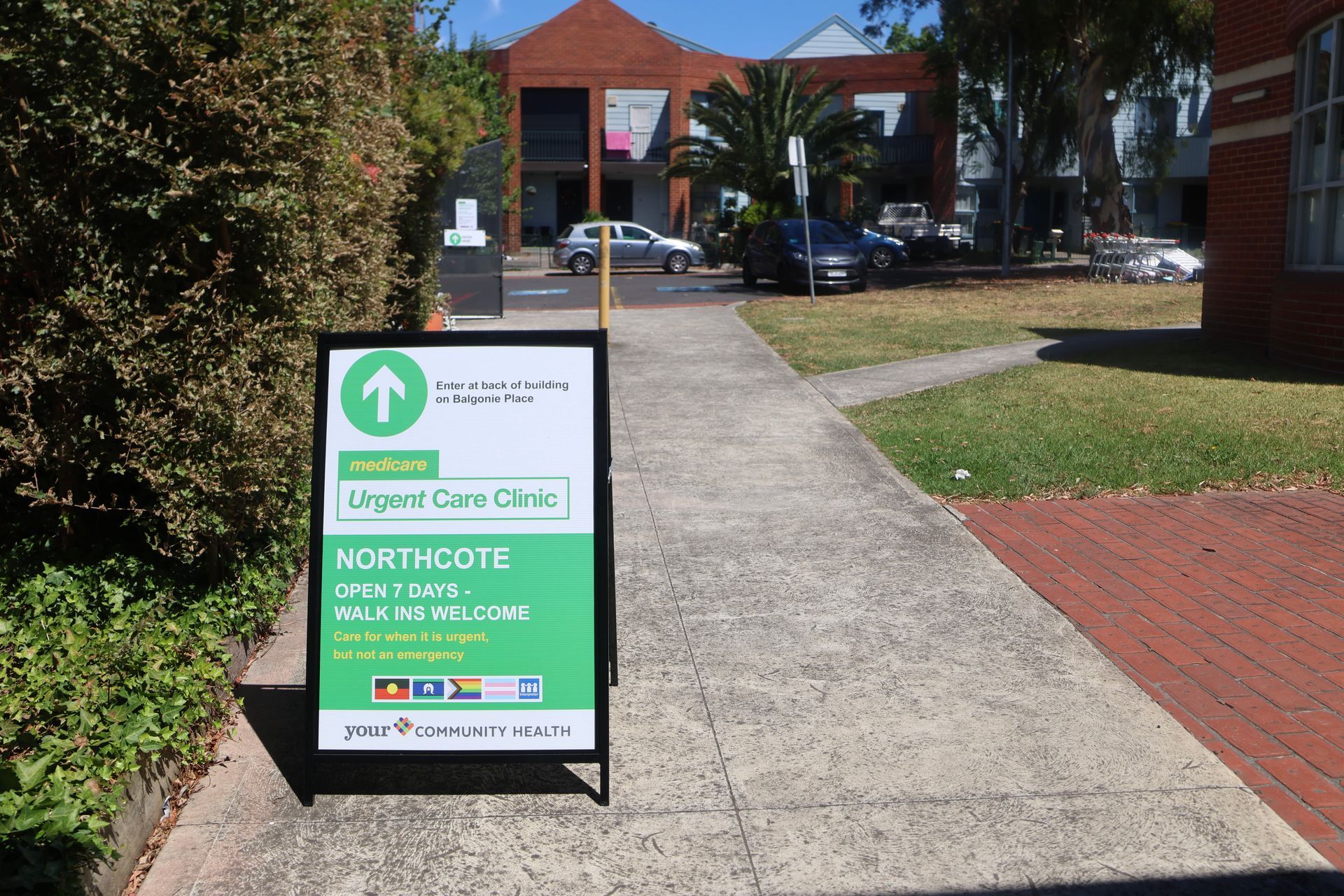
Pictured:
Entry sign at Northcote Urgent Care Clinic. Image courtesy of Your Community Health.
During 2025–26, NWMPHN’s Urgent Care Clinic network recorded 90,051 visits.
NWMPHN monitors and evaluates UCC performance and quality of service through using digital experience surveys. Findings from this process indicate that between 28 and 50 per cent of consumers would otherwise have attended a hospital emergency department if a Medicare UCC had not been available.
Along with other factors, such as easier access to bulk billing, UCCs have likely contributed to Victorian Agency for Health Information data shows that category four and five presentations to emergency departments have declined.
“The response from the Northcote community has been very positive,” said a spokesperson for the Northcote facility.
“The clinic is often at or near capacity, which reflects just how much the service is valued and needed by local residents.
“We regularly receive positive feedback from patients, and many people tell us how much they appreciate having access to timely, local urgent care.”
To further optimise the effectiveness of Victoria’s urgent care clinics NWMPHN has been working with primary health networks across the state to create an online capacity tracker. It provides estimated wait times for all UCCs in Victoria and is used by health services and Ambulance Victoria to support timely referrals.
Christopher Carter, NWMPHN Chief Executive Officer, said the emergence of the clinics since 2023 had transformed the way people seek primary health care.
“Data shows people often attend Medicare Urgent Care Clinics for respiratory infections, lacerations, coughs, urinary tract infections and abdominal pain,” he said.
“These are all conditions which should ideally be treated quickly, but which don’t necessarily require emergency care. The clinics make bulk billed urgent GP and nurse services for these types of things more easily available to people in central, northern and western Melbourne, as well as adjacent rural areas.
“Medicare Urgent Care Clinics are now a vital part of our health system, working alongside regular general practices, hospitals, and online services such as the Victorian Virtual Emergency Department, 1800MEDICARE and Nurse-on-Call.”
Christoper Carter
Chief Executive Officer • NWMPHN