As part of the Australian Government’s Strengthening Medicare reforms, primary health networks across the country are building multidisciplinary care teams (MDT) to deliver high-quality continuity of care to address people’s health needs.
The MDT model improves coordination of care for people with chronic conditions, psychosocial complexity and severe or complex mental ill health.
It is intricate work, with many hands, many perspectives, and many moving parts. But that complexity is precisely the point, because it is what allows us to see the consumer as a whole person with a life and a context, not a list of diagnoses.
With general practice at their heart, MDTs link in related health disciplines to create wraparound care for people with chronic or complex conditions. Critical to this is the ‘neighbourhood care team’ – a highly mobile pairing of a social worker and a care coordinator. The care team spends at least one day each week at participating practices, facilitating case conferences and exploring options for each patient.
With the patient actively participating in decision-making, the model has clear capacity to reduce potentially preventable hospital admissions and emergency department presentations.
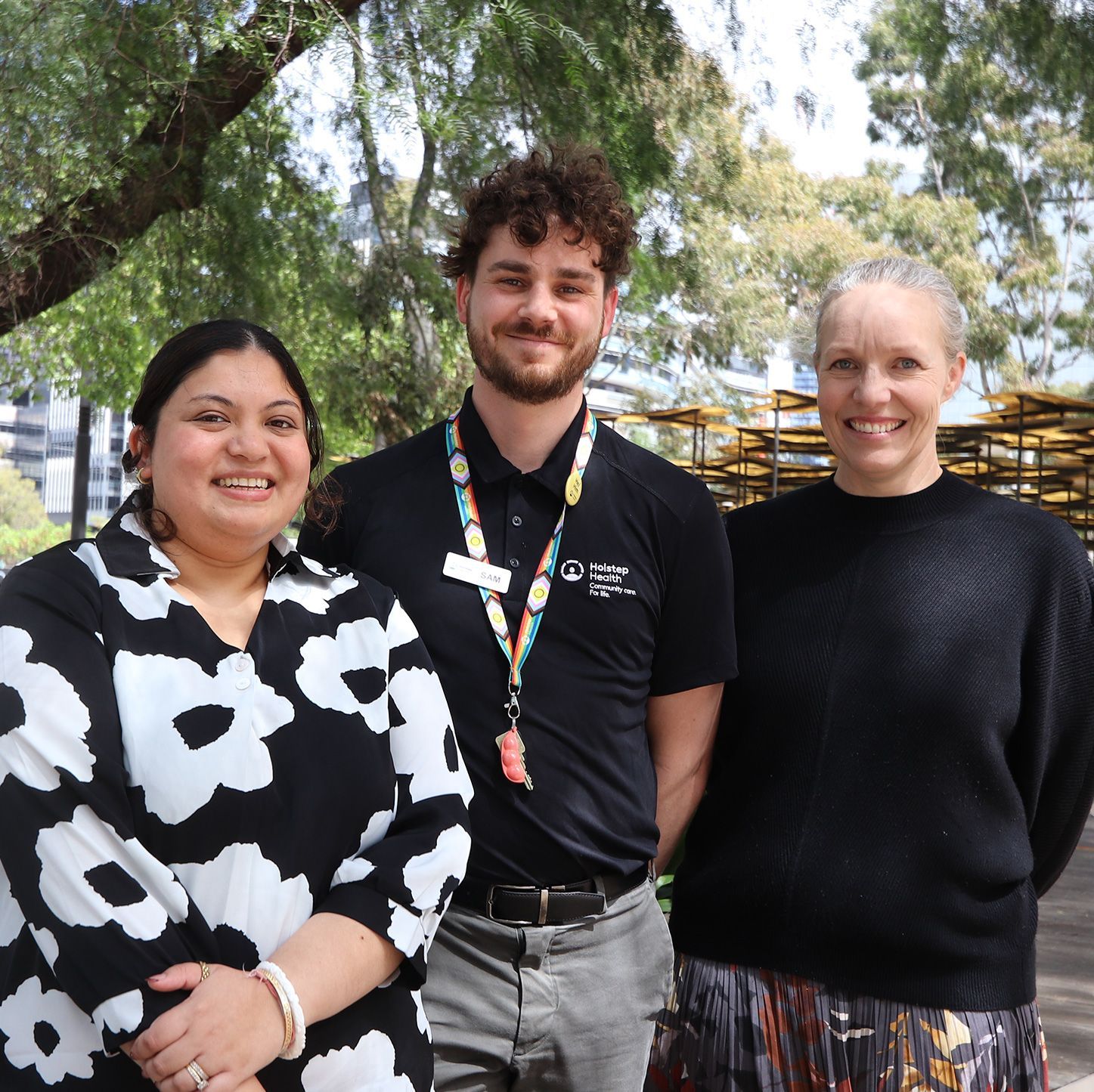
Pictured: The Neighbourhood Care Team from Holstep Health (L to R) Aishika Roy, Care Coordinator, Sam Hodgkinson, Team Leader, Christine Kendall, Chronic Pain Service and Community Connections.
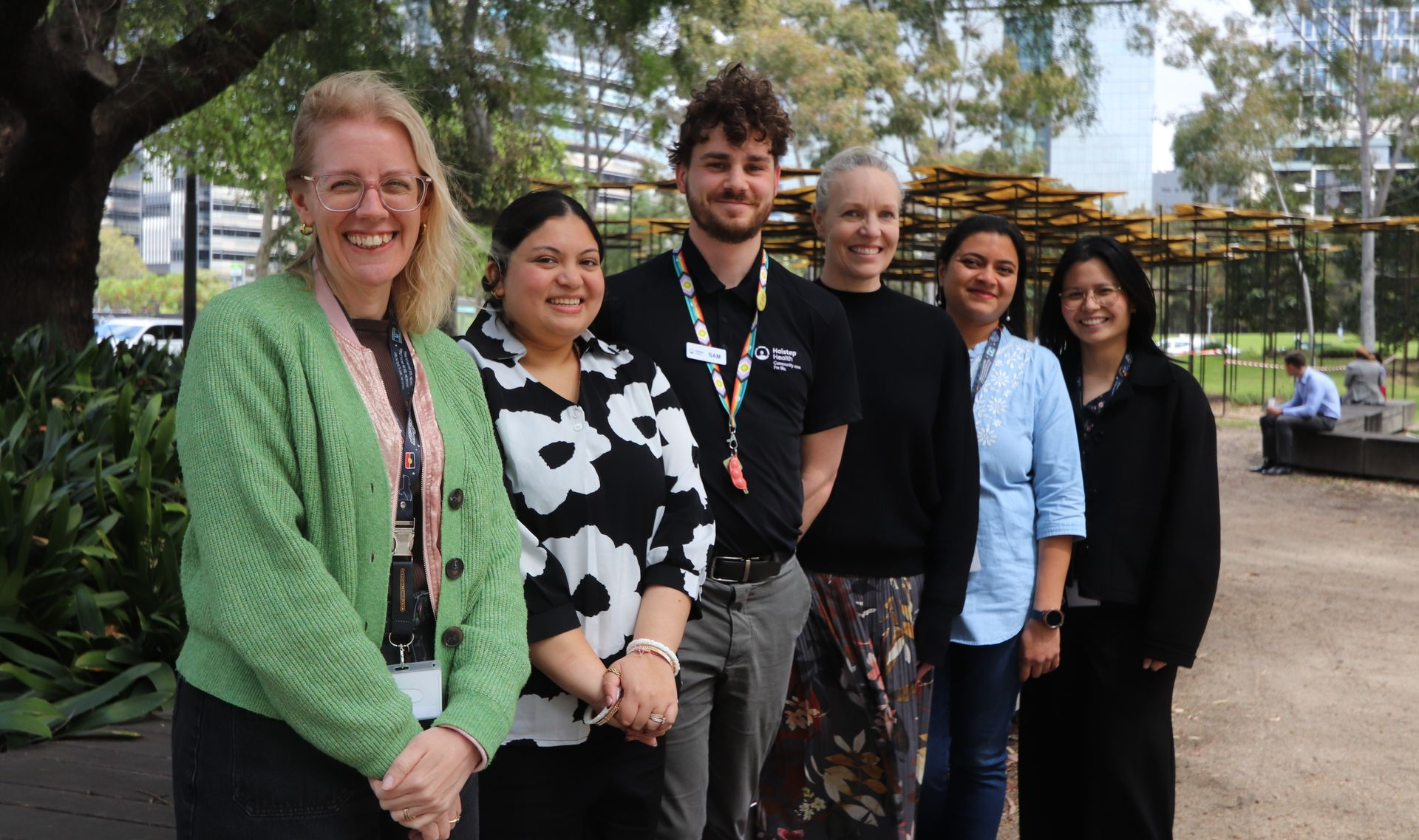
Pictured: NWMPHN and Holstep Health team members working on the Hume Health Care Neighbourhood Project are excited to see the project expanding into Brimbank. (L to R) Juliet Fieldew, Aishika Roy, Sam Hodgkinson, Christine Kendall, Snehal Shah and Lyanna Yamsuan.
Geographically focused, with an emphasis on accessible services, MDT projects run by NWMPHN are grounded in digital pathways for consumer engagement. They are styled as ‘health care neighbourhoods’.
Each aims to strengthen the capability of primary care providers to deliver multidisciplinary care, improving patient support by designing it in general practice.
“In the health care neighbourhood model, the GP practice becomes the anchor point for a more coordinated response,” explained Dr Dee Al-Nawab, NWMPHN’s manager, population health and evaluation.
“At its heart, MDT work is about making general practice less isolated and less episodic, so that people who need care receive it at the time they need it, in the way they need it, closer to home, and as one seamless experience rather than a series of disconnected encounters.
“The goal is not simply more appointments. The goal is shared care: clearer roles, better transitions, more timely support, and less escalation to emergency departments when primary care could have held the person earlier and better.”
The organisation currently has three such neighbourhoods at various levels of development. Although the fundamentals – team-based cross-discipline care, with patient involvement in decision-making – are similar, each is configured according to the identified needs of the neighbourhood in which it takes place.
The most mature of the health care neighbourhood projects centres on the local government area of Hume. The program started in June 2024 and is funded until June 2027 with a total pre-GST funding of $2,386,000. Four general practices are participating: Doy St Medical Centre, Merrifield City Medical Centre, Roxburgh Park Doctors and DPV Health. Holstep Health has been commissioned to supply the neighbourhood care team.
The second health care neighbourhood project centres on Melton LGA. Participating practices will be assisted by a separately commissioned care team. It will begin operating 2026-27.
The third MDT project – still in its early stages at the time of writing – centres on the LGA of Brimbank.
Integrated care delivers better outcomes for patients, and builds collaborative networks across professions and across localities.
Bianca Bell
Executive Director • Health Systems Integration
While the general model is the same, the Brimbank Health Care Neighbourhood will have an expanded care team, with a mental health professional joining the coordinator and social worker. It is expected to be in operation in 2026-27.
“NWMPHN is working with the commissioned providers and patient representatives to co-design a model that best suits each practice’s ways of working and patient cohort,” said Bianca Bell, NWMPHN’s Executive Director, Health Systems Integration.
“This means we can adjust the health care neighbourhood model to best suit the chronic and complex condition profile as we need to.
“Integrated care delivers better outcomes for patients, and builds collaborative networks across professions and across localities.”
To support the program, NWMPHN and our survey partner Cemplicity designed and created a digital tool to facilitate the delivery of patient-reported outcome measures (PROMs) and patient-reported experience measures (PREMs) to provide insight into the program.
This allows for clinical oversight of the patient’s journey, as well as providing practical assessment of the service delivery to assist with any future quality improvement actions. The tool has been successfully rolled out in the Hume program, with plans to adapt and apply the same workflow across future iterations in other areas.